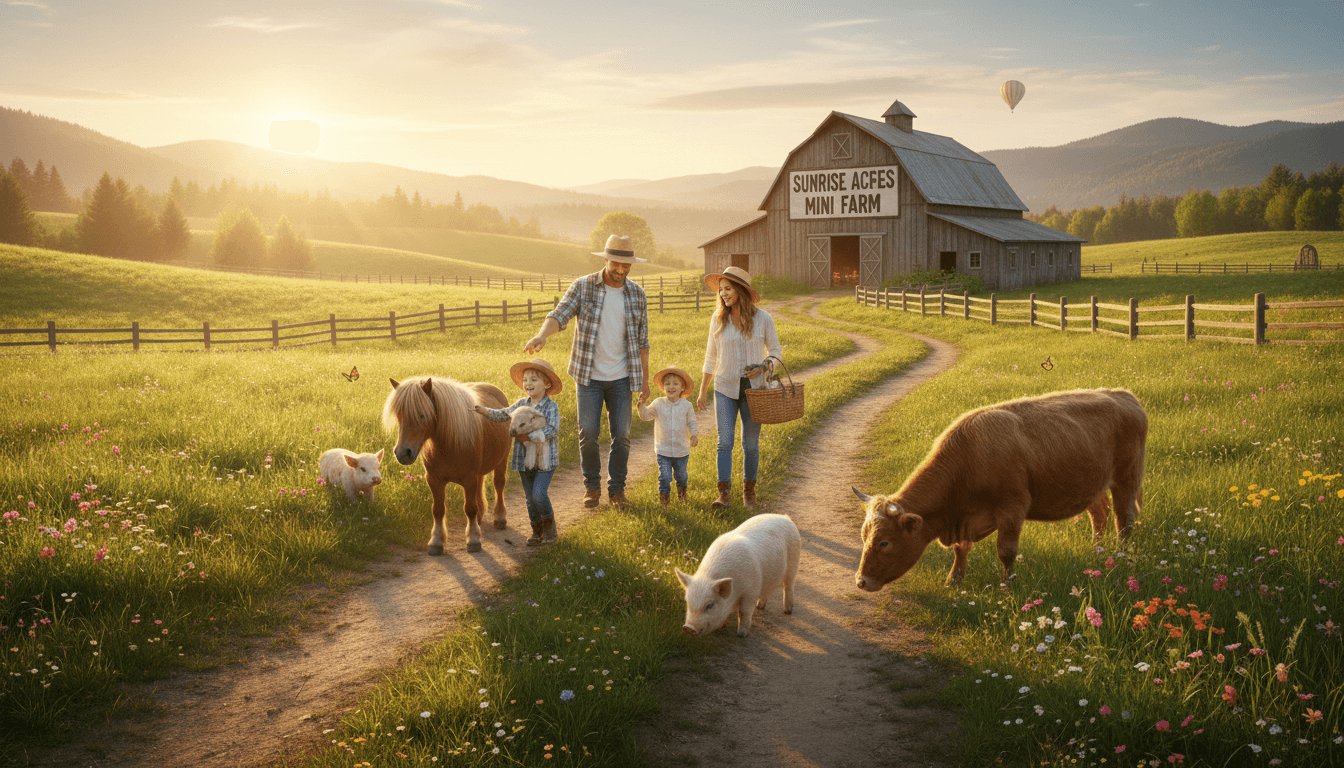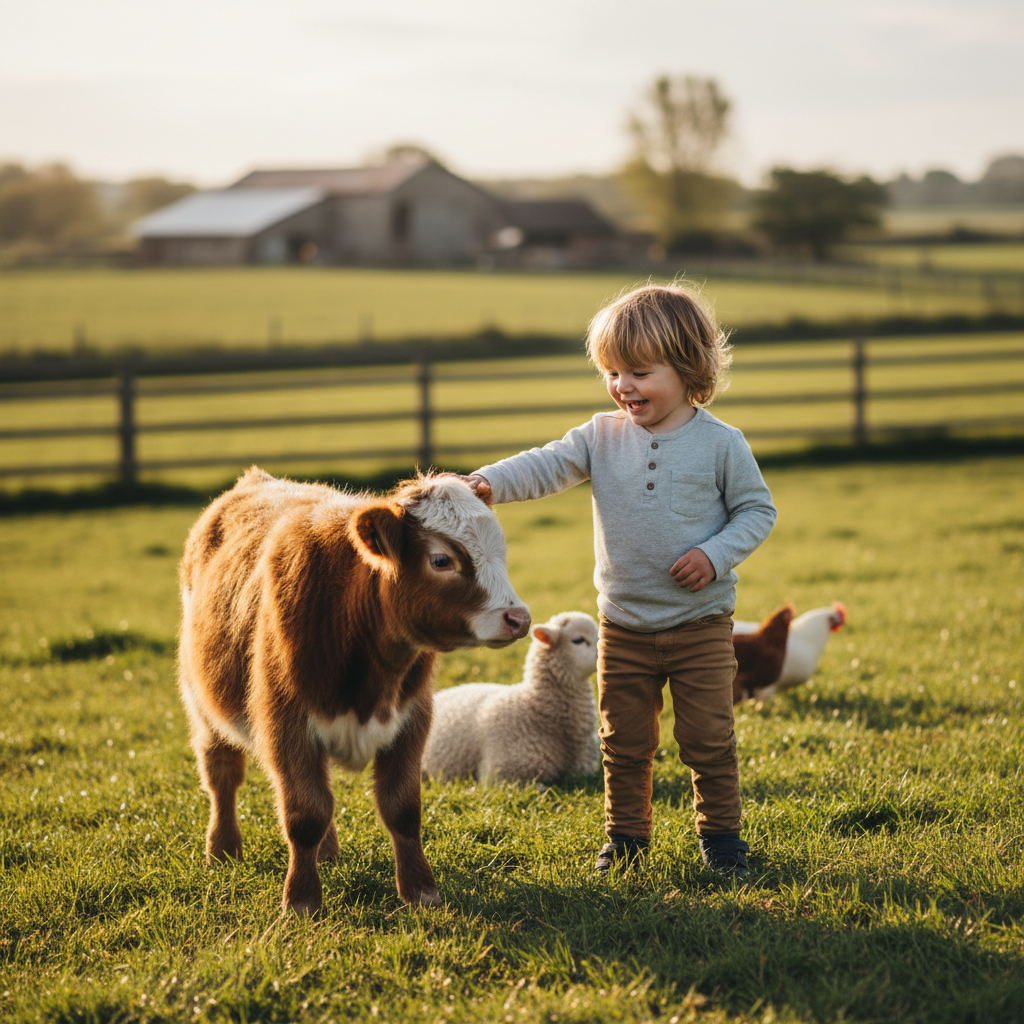
Interacting with farm animals helps children develop empathy by teaching them to recognize non-verbal cues and provide compassionate care to living creatures. These regular experiences foster emotional awareness and social responsibility, which reduces anxiety and builds long-term confidence. By observing animal behavior, kids learn to regulate their own emotions and connect more deeply with the natural world.
Many parents today worry that their children are becoming too disconnected from the natural world, trading real-world interactions for digital screens. This lack of connection often makes it difficult for young minds to practice the subtle skills of empathy and emotional intelligence. At WaffleFamily Farm, we believe the barnyard is more than just a place to see animals; it is a living classroom where children learn to interpret the needs of others. When a child observes a goat's gentle nudge or a sheep's quiet trust, they begin to understand a language beyond words. In this post, we will explore how hands-on animal interactions foster deep compassion, build personal confidence, and provide the vital sensory experiences necessary for healthy development. You will discover why time spent on the farm is an essential investment in your child's social and emotional growth.
The Power of the Barnyard: More Than Just a Petting Zoo
Today’s childhood is increasingly defined by high-resolution screens and indoor environments, a shift that has given rise to the concept of Nature Deficit Disorder. This lack of meaningful outdoor engagement is often linked to heightened anxiety and shorter attention spans in developing minds. To counter this, we advocate for the farm effect, a restorative experience where the raw textures and rhythms of nature help ground a child’s nervous system and improve cognitive focus.
While household pets like dogs or cats provide companionship, farm animals like mini cows and micro donkeys offer a unique scale and social complexity. These animals possess distinct personalities and boundaries that challenge children to adjust their own energy and behavior. Interacting with a mini horse requires a different level of spatial awareness and respect than playing with a family puppy; it is this subtle challenge that fosters true emotional growth.
WaffleFamily Farm in Hudson, Florida, is designed as a sanctuary for this development within the Tampa Bay area. By providing a peaceful environment for animal interaction and unstructured play, we offer families a practical way to trade digital noise for the meaningful silence of the barnyard. Here, children can move at the pace of nature, building the foundation for a healthier, more connected life.
Learning the Language of Kindness: How Farm Animals Help Children Develop Empathy
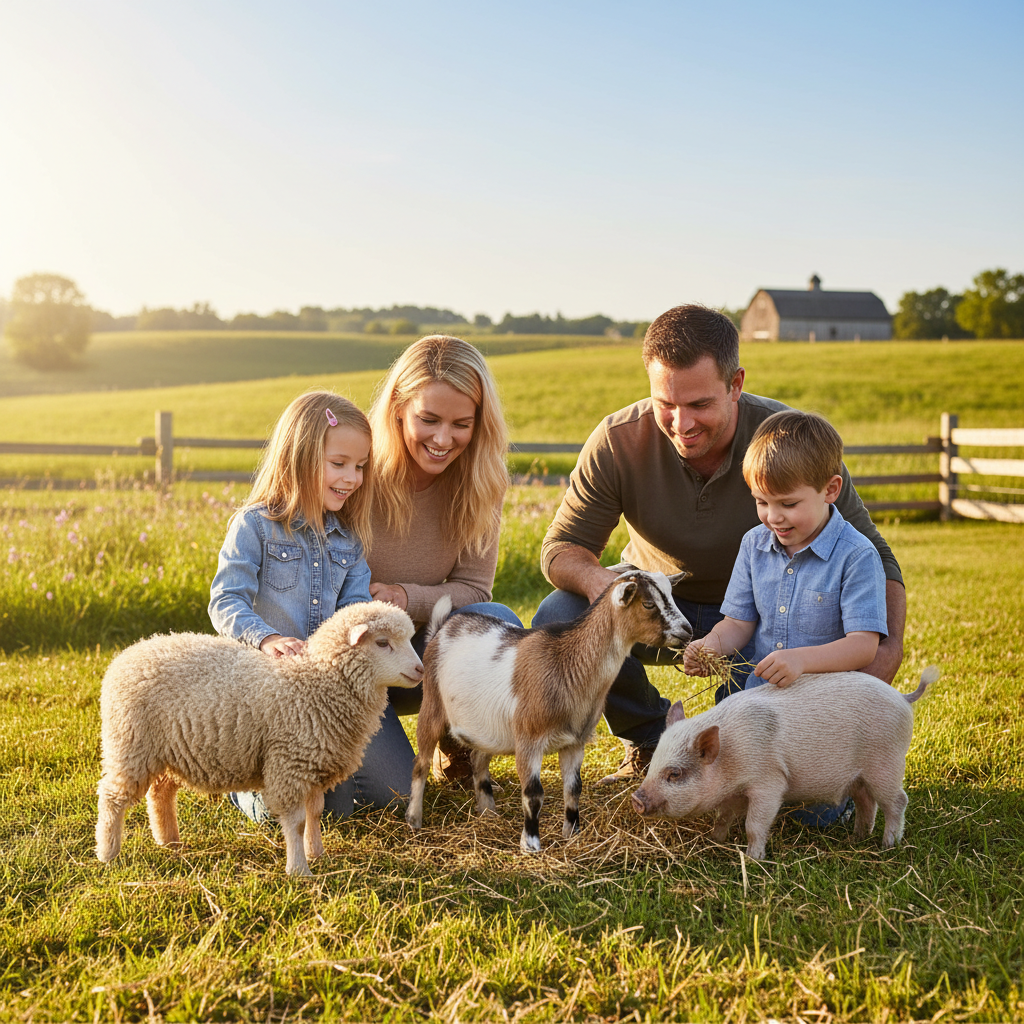
Empathy is often described as a soft skill, but it is actually a complex cognitive process called perspective-taking. For a child to develop this, they must step outside their own immediate desires and recognize that another living being has a separate set of needs, feelings, and boundaries. Farm animals are uniquely qualified teachers in this area because their communication is entirely non-verbal. Unlike digital interfaces where a swipe or click yields an instant, programmed response, a mini horse or a micro donkey requires a child to observe and interpret subtle physical signals.
When a child approaches a goat, they might notice the flick of an ear or a subtle shift in weight. These are not random movements; they are the animal’s way of communicating comfort, curiosity, or a need for space. To interact successfully, the child must slow down and adjust their own behavior based on these cues. If the child is too loud or moves too quickly, the animal retreats. If the child is calm and gentle, the animal may offer a gentle nudge or lean in for a scratch. This real-time cause-and-effect relationship teaches children that their actions have an emotional impact on others. This is the core of how farm animals help children develop empathy; it moves the child from being a passive consumer of entertainment to an active, considerate participant in a relationship.
In a world of artificial feedback, these organic interactions are vital for healthy social development. Research indicates that children who regularly interact with animals show significantly higher levels of social intelligence. Animals provide a non-judgmental space where shy or anxious children feel safe to practice these social cues. A mini cow does not care about a child’s academic performance; it only responds to the child’s current energy and kindness.
These lessons in the barnyard translate directly to the classroom and the playground. A child who has learned to respect the boundaries of a giant bunny or a mini horse is more likely to recognize when a peer needs space or support. By practicing this language of kindness, children build the emotional vocabulary needed to navigate human relationships with greater sensitivity. To see these interactions in practice, you can join us for a Mother's Day workshop or contact us today to learn more about our visiting hours.
From Hesitation to High Fives: Building Confidence Through Animal Interaction
The transition from understanding the language of kindness to acting on it creates a bridge between empathy and personal agency. When a child overcomes the initial hesitation of approaching a mini cow, they are engaging in a form of managed risk that is essential for psychological growth. While the scale of our animals is approachable, a mini horse still represents a significant presence to a young child. Moving from a cautious stance to a confident interaction or a steady hand while brushing a giant bunny creates a sense of mastery that cannot be replicated in a controlled indoor setting.
This mastery is built through practical achievements. Leading a micro donkey requires the child to be assertive yet calm, a balance that fosters self-regulation. By successfully navigating these interactions, children prove to themselves that they can handle new and slightly unpredictable situations. This internal shift from hesitation to accomplishment is the foundation of genuine self-esteem. It is a direct result of how farm animals help children develop empathy and confidence simultaneously; they must understand the animal’s temperament to interact with it effectively.
Beyond animal interaction, our nature maze offers a different type of confidence building. In the maze, children practice independent problem-solving as they make choices about which path to take. There are no flashing arrows or digital prompts to guide them. Instead, they must rely on their own observations and trial-and-error. This unstructured outdoor play allows children to manage their own actions and work through challenges, reducing anxiety by proving their own competence in a real-world environment. If you want to see your child build this independence in a safe, supportive space, contact us today to learn more about our farm layout and activities.
Combatting Nature Deficit Disorder with Screen Free Outdoor Play
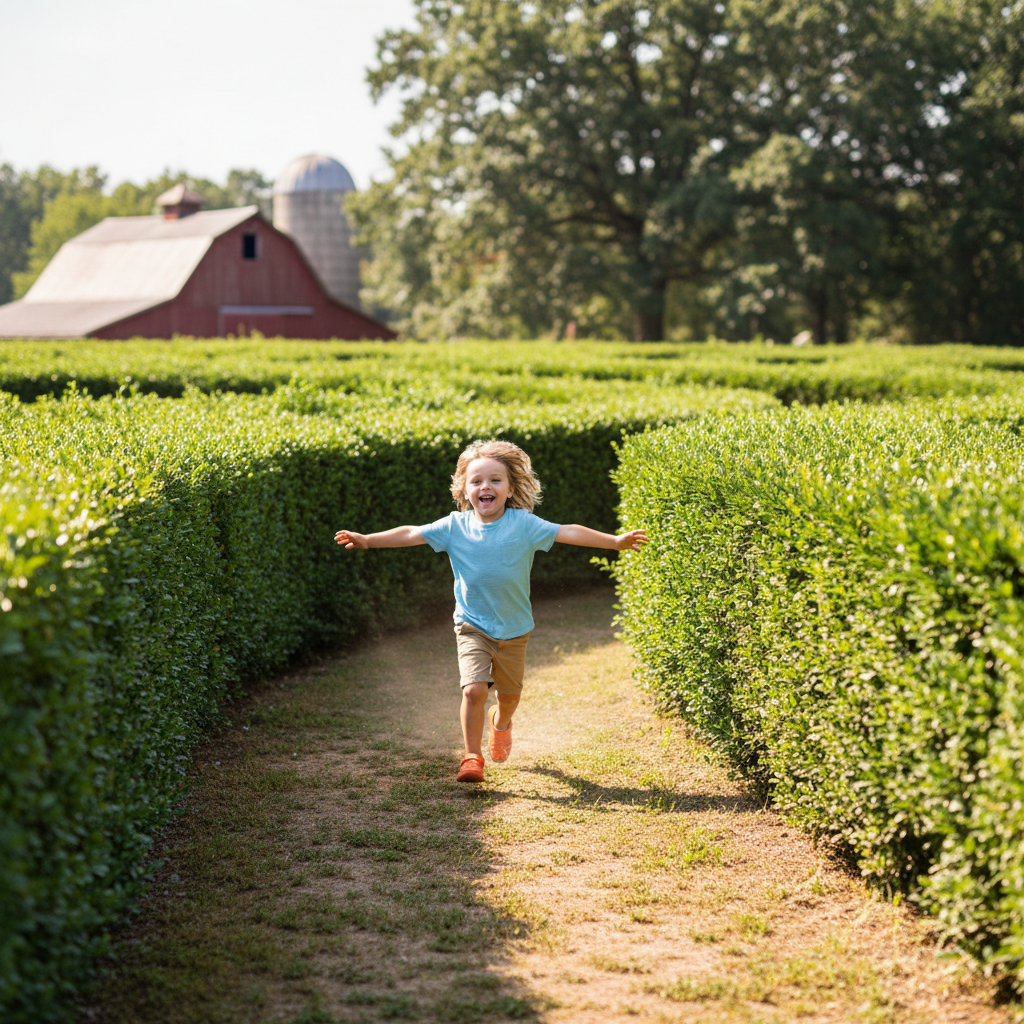
Children require nature to maintain psychological and physiological balance. While the digital world provides constant stimulation, it often lacks the multi-sensory depth needed for cognitive recovery. Research consistently demonstrates that time spent in green, outdoor settings reduces symptoms of ADHD and lowers general anxiety by providing a restorative environment. This is particularly relevant for Florida families who often find themselves retreating indoors for several months of the year due to high temperatures. This indoor confinement, while necessary for comfort, frequently results in a significant reduction in unstructured play, which is vital for a child's problem-solving skills and emotional resilience.
At WaffleFamily Farm, we offer specific amenities designed to facilitate this developmental growth. Our soccer billiards and nature maze encourage children to move their bodies while engaging their minds in non-linear ways. In these spaces, there are no programmed outcomes or digital prompts; children must navigate physical challenges and make independent choices. This type of play allows them to practice managing their own actions in a low-stress environment, fostering a sense of autonomy that indoor settings rarely permit.
Furthermore, these outdoor experiences complement the emotional lessons learned in the barnyard. As children burn off energy on the soccer billiards court, they enter a more regulated neurological state, making them better prepared for the quiet, focused interactions required with our animals. This synergy between active play and calm observation is a key part of how farm animals help children develop empathy and self-regulation. By providing a dedicated space for screen-free exploration, we help families break the cycle of nature deficit and foster a more grounded, confident generation.
The Sensory Connection: Why the Barefoot Sensory Trail Matters

The barefoot sensory trail at WaffleFamily Farm serves a purpose far beyond simple recreation; it is a targeted neurological exercise. When children remove their shoes to traverse a path of varying textures such as smooth river stones, damp soil, and sun-warmed grass, they activate thousands of nerve endings in their feet. This process, often called grounding, sends a flood of sensory information to the brain. This input improves proprioception and helps toddlers and older children alike regulate their nervous systems, transitioning them from a state of high-stimulation to calm focus.
While generic petting zoos limit the farm effect to fence-side viewing, our sensory trail encourages direct physical contact with the earth. This tactile engagement is a prerequisite for emotional depth. A child who is physically present and aware of their own body is better equipped to focus on the living beings around them. This heightened state of awareness is a critical component in how farm animals help children develop empathy. When a child’s nervous system is regulated through sensory play, they are more capable of observing the subtle non-verbal cues of a mini horse or a micro donkey. By integrating these tactile experiences into a visit, families can contact us today to provide their children with a holistic approach to nature-based learning.
Developing Responsibility and Social Intelligence
A visit to the barnyard introduces children to a vital set of social contracts that differ from the digital world. When we ask children to use walking feet or gentle hands, we are inviting them to participate in the maintenance of a shared, living environment. These rules teach responsibility because the consequences are immediate and visible. If a child runs, the mini horse moves away. If a child is quiet and patient, the micro donkey stays. This cause and effect relationship is a practical application of how farm animals help children develop empathy, as they must prioritize the comfort of the animal over their own impulse to run or shout.
These moments of restraint foster social intelligence that extends to human interactions. Families at WaffleFamily Farm often find themselves engaging in shared tasks, such as observing the herd's behavior or gathering around the open-fire kitchen. In the fast paced suburbs of the Tampa Bay area, these opportunities to slow down and co-regulate are rare. Instead of competing for attention with a screen, parents and children collaborate on the shared experience of nature. This collaborative observation helps children learn to navigate public spaces with respect and awareness, building the social maturity required for school and community life. You can contact us today to plan a day focused on these meaningful family connections.
Planning Your Visit for Growth and Connection
To maximize the developmental impact of your visit, arrive with the intention of being present rather than checking items off a list. Before entering the barnyard, ask your child to observe the animals from a short distance. This intentional pause allows them to practice the situational awareness required for safe, meaningful interactions.
Once you are near our mini cows or micro donkeys, use open ended questions to stimulate perspective taking. You might ask, "Why do you think the mini cow is standing in the shade right now?" or "What do you think the donkey’s ears are telling us about how he feels?" These prompts help bridge the gap between simple observation and the deeper cognitive understanding of how farm animals help children develop empathy.
If you want to deepen these bonds through guided activities, consider joining us for a Mother's Day workshop or exploring our other seasonal events. These focused experiences provide additional structure for children to practice patience and mastery. You can contact us today to learn about our current schedule and ensure your family has a quiet, impactful time on the farm.
Watching a child bond with a farm animal is a powerful experience that builds character and lasting memories. These early lessons in empathy and responsibility lay a vital foundation for their future development. While the benefits are clear, setting up the right environment for these interactions takes careful planning and care. If you want expert help creating a safe, educational space for your family to connect with nature, we invite you to contact our team. We are always happy to guide you through this rewarding process.